Frequently Asked Questions
Quick answers to the questions we hear most.
Do you take my insurance?
We're finalizing our accepted insurance plans. Visit our Insurance & Pricing page for the most current list, or give us a call to verify your specific plan.
Do I need a referral to be seen?
Most patients can schedule directly without a referral. Some insurance plans require one for specialist visits to be covered. Check with your insurance provider if you're unsure, and we're happy to help confirm.
What ages do you see?
Allergies also run in families, and Dr. Welch often ends up caring for multiple generations under one roof: from infants to grandparents.
What should I do before my first visit for allergy testing?
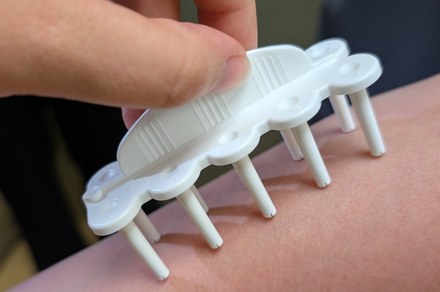
A skin prick test applicator being applied to the forearm — quick, minimally uncomfortable, and over in seconds.
Certain medications can interfere with skin and drug testing results, so we ask patients to pause a few categories beforehand. Please don't stop any medication you take for another health condition without checking with the doctor who prescribed it.
- Oral antihistamines (Allegra, Zyrtec, Xyzal, Claritin, Benadryl, Atarax/Vistaril, Clarinex, and similar) — avoid 7 days prior
- Nasal antihistamine sprays (Astelin, Astepro, Dymista, Patanase, Ryaltris) — avoid 3 days prior
- Antihistamine eye drops (Pataday, Patanol, Pazeo, Zaditor, Alaway, Lastacaft) — avoid 3 days prior
- Anti-nausea medications (Antivert, Dramamine, Phenergan, Compazine) — avoid 7 days prior
- Antacids / H2 blockers (Pepcid, Tagamet, Zantac, Axid) — avoid 3 days prior
- Sleep aids and any “PM” product (Tylenol PM, Advil PM, Unisom, and similar) — avoid 7 days prior
- Combination cold, flu & sinus products — avoid 7 days prior (many contain a hidden antihistamine)
This is a summary — for the complete list with all brand names, download our full medication hold reference (PDF). This list may not be exhaustive, so if you have questions about a specific medication, please call our office before stopping anything. You can also learn more about what to expect during skin testing on our Services page.
What should I do before my first visit for chronic hives evaluation?
Preparation for a chronic hives evaluation is different from preparation for allergy skin testing. Please continue taking your antihistamines as usual. Unlike skin testing, a hives evaluation does not require you to stop them.
What is an oral food challenge?
An oral food challenge is a supervised, in-office procedure where a patient eats small, gradually increasing amounts of a food under close medical observation. It's used to confirm or rule out a true food allergy, since many suspected food allergies turn out not to be real allergies once tested this way. Because there's a small chance of a reaction, the challenge takes place entirely in our office, with our team ready to respond if needed.